
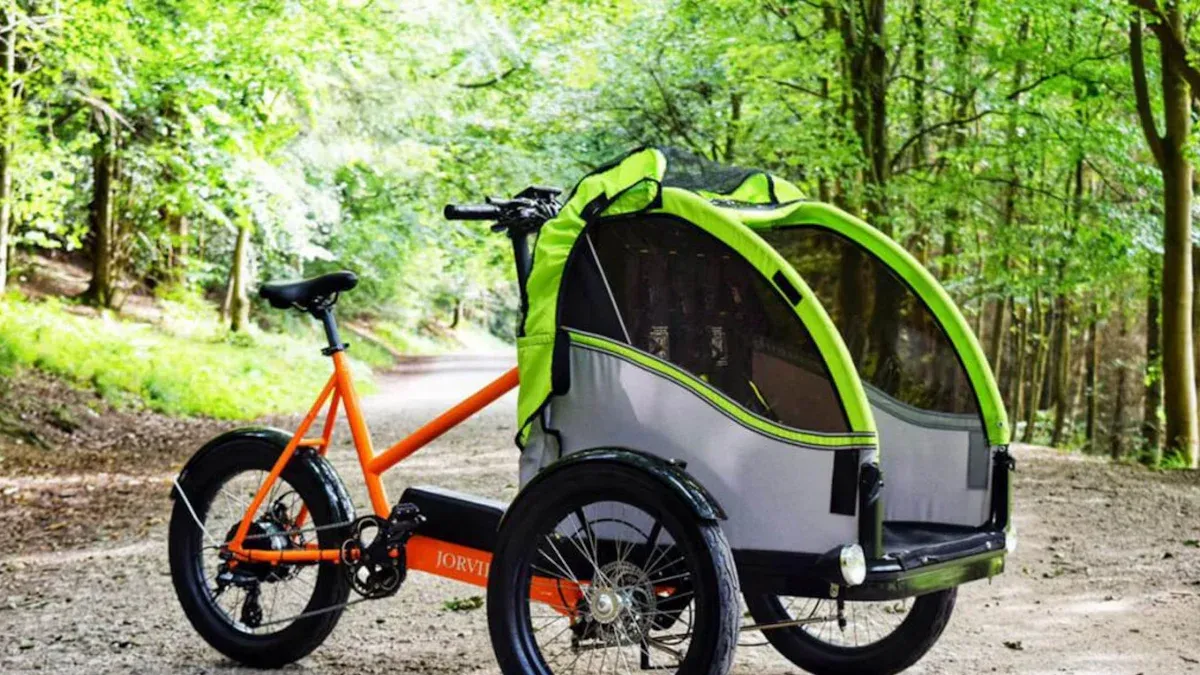
Are you looking to use an e-bike trailer? Then there are a few important points you should consider. First, check whether the trailer is compatible with your e-bike. Pay attention to the correct coupling system and the permitted tongue weight. Your safety always comes first. Also, follow the legal regulations to ensure you stay safe on the road.
Key takeaways
Choose a trailer that suits your intended purpose—such as for children, cargo, or dogs—to ensure safety and comfort.
Pay attention to the load capacity and the permissible total weight so that your e-bike is not overloaded and range is maintained.
Check the compatibility of the coupling system with your e-bike to guarantee a stable and secure connection.
Ensure comfort through suspension, large tires, and ease of use, especially for longer trips or when transporting children.
Follow all legal requirements and perform safety checks before every ride to prevent accidents and ensure a safe journey.
Selection criteria
Intended use
Before you select an e-bike trailer, you should consider what you want to use it for. Do you want to transport children, run errands, or perhaps take your dog along? Every purpose places different demands on the trailer. For transporting children, you need a particularly safe trailer with a stable connection. Children must be buckled in, and good suspension is often important to keep the ride comfortable. For cargo transport, load capacity is what matters most. For animals, there are special models with ventilation and a non-slip floor.
Tip: The lighter the trailer, the less power your e-bike consumes. This preserves the battery and increases your range. Only take what you really need.
Load capacity
Load capacity is a central criterion. You must always observe the permissible total weight of the e-bike, the trailer, and the load. An e-bike trailer that is too heavy puts a strain on the motor and reduces range. The additional weight also changes how the bike handles. Choose a trailer that meets your needs but is not unnecessarily heavy. For heavy loads or long distances, an e-cargo bike with a stronger battery may make sense.
Check the maximum payload of your e-bike and the trailer.
Pay attention to the tongue weight of the coupling so that the material is not overloaded.
A light trailer makes handling easier and saves energy.
Compatibility & coupling system
Not every trailer fits every e-bike. Compatibility depends on the frame, the axle, and the coupling system. Modern e-bikes often have thicker frames or special dropouts. Therefore, you sometimes need adapters or special couplings. There are different coupling systems that differ in how they are attached and their stability.
Coupling system |
Attachment point |
Features / Compatibility |
|---|---|---|
Axle mount |
Rear wheel axle |
Quick to mount, stable, versatile, suitable for child and cargo trailers |
Seat post mount |
Under the saddle |
For light trailers, simple mounting |
Frame mount |
Frame (usually chainstay) |
Very stable, requires attachment points on the frame |
Extended rear axle |
Rear axle (extended) |
For special frame designs, adapters often necessary |
Ensure that the coupling matches your e-bike. Check the manufacturer's approval and adhere to safety standards. The tongue weight must not be exceeded, otherwise, it can lead to material damage or unsafe handling.
Comfort & handling
Comfort plays a major role, especially on longer trips or when transporting children. Good suspension protects against bumps on uneven paths. Large, air-filled tires ensure smooth rolling. A low entrance makes it easier for children or animals to get in and out. Look for ease of use when hitching and unhitching the trailer. Practical details like parking brakes, reflectors, and rain covers increase safety and comfort.
Choose a trailer with an ergonomic handle if you also want to use it as a stroller.
A foldable trailer saves space during storage.
Regularly check the connection and tire pressure for a safe ride.
E-bike trailer types
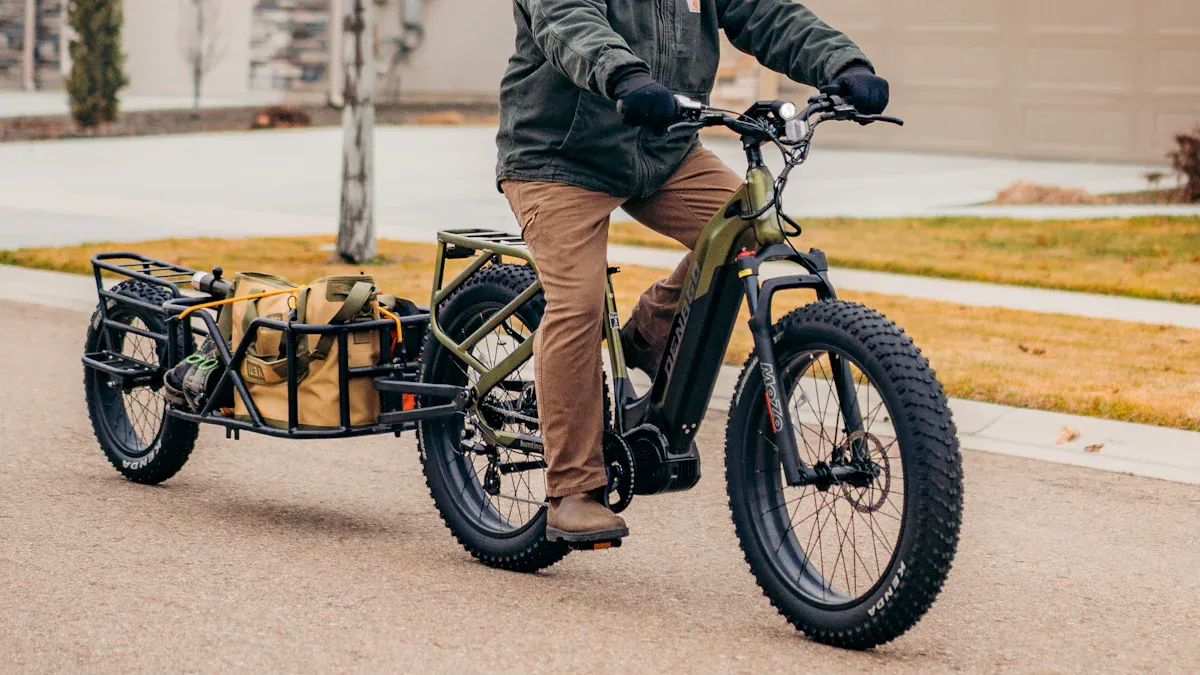
On the market, you will find many different trailer types for your e-bike. Each type has special features and is suitable for different purposes. The following table gives you a quick overview:
Type of e-bike trailer |
Description |
Designs / Special features |
Examples / Manufacturers |
|---|---|---|---|
Transporting children, often with suspension, ergonomic seats |
Single or double seater, with cover, multifunctional |
Croozer Kid Vaaya 1, Qeridoo Speedkid2, Thule Coaster XT |
|
Cargo trailer |
Transporting luggage or heavy loads |
Two-wheeled, foldable, various couplings |
Fischer Profi Plus III, Tiggo Foldable |
Dog trailer |
Transporting dogs, spacious, with ventilation |
Two-wheeled, often with front wheel for walks |
Burley Bark Ranger, Hafenbande Cabby L |
Single-track trailer |
Narrow, off-road capable, minimal impact on handling |
Single-wheeled, suspended |
Bob Yak by Croozer, Mule by Tout Terrain |
Multifunctional trailer |
Combinable as bike trailer, buggy, jogger |
With push handle, jogger wheel, handbrake |
Qeridoo Sportrex 1, Hamax Outback |
Child trailers
Child trailers offer you a safe way to transport one or two children. Many models feature suspension and ergonomic seats. You can often use them as a buggy, too. Pay attention to important safety features:
Stable connection between e-bike and trailer
Seat belts for every child
Suspension for more comfort
Reflectors and lighting for better visibility
Only permitted for e-bikes up to 25 km/h
Child trailers must meet the European standard DIN EN 15918. Most models are suitable for children up to 7 years old. Known manufacturers are Croozer, Qeridoo, and Thule.
Cargo trailers
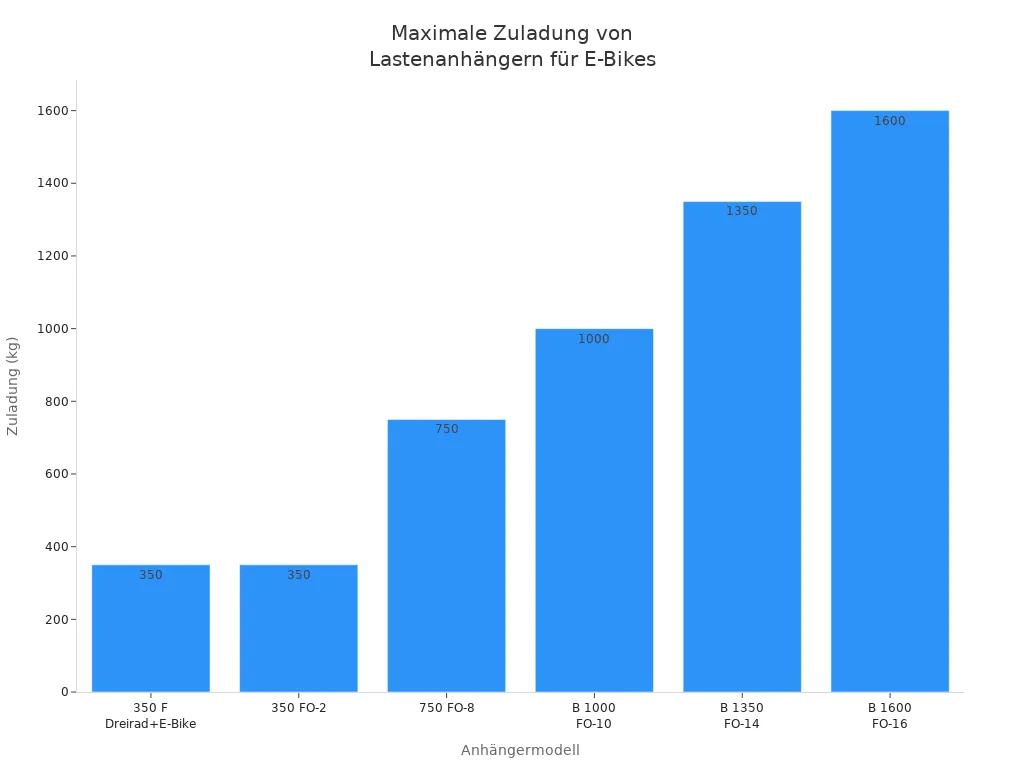
With a cargo trailer, you can transport groceries, luggage, or even heavy goods. Many models can be folded and easily hitched or unhitched. The maximum payload is usually around 45 kilograms. For particularly heavy loads, there are special models with a payload of up to 1,600 kilograms. The following diagram shows you the differences in maximum payload:
Tip: Always check the permissible total weight of your e-bike and the manufacturer's approval for the e-bike trailer.
Pet trailers
Pet trailers are built specifically for dogs or other pets. They offer plenty of space, ventilation, and good suspension. Pay attention to the following safety features:
High-quality suspension
Reflectors and taillight
Stable coupling like on child trailers
Avoid cheap models without suspension, as they are often unstable. Known models include the Burley Bark Ranger or the Hafenbande Cabby L.
Special models
For specific requirements, there are special models. These include:
Single-track trailers for narrow paths and rough terrain
Multifunctional trailers that you can use as a buggy or jogger
Foldable models for minimal storage space
Travel trailers with low weight and rolling resistance
Bike transport trailers for multiple e-bikes
These models offer you flexible solutions for extraordinary transport tasks. Manufacturers such as Croozer, Thule, and Harbeck offer a large selection.
Safety & Maintenance
Legal regulations
You should always inform yourself about the legal regulations for e-bike trailers in your country. The rules differ significantly across Europe. The following table shows you important differences:
Country |
Important legal regulations for e-bike trailers and child transport |
|---|---|
Germany |
For S-pedelecs, hitching child transport trailers is prohibited; comprehensive regulations on lighting, helmet requirements, driver's licenses, and registration requirements. |
Switzerland |
Motor power of e-bike trailers is limited to a maximum of 500 watts. |
UK |
Maximum weight for pedelecs is 30 kg. |
Netherlands |
Reflectors on the wheel are mandatory. |
Estonia |
Reflectors on the wheel are mandatory. |
Norway |
Assisted speed must not exceed 250 watts and 20 km/h. |
Denmark |
Obligation to have a headlight and taillight that must be visible from at least 300 meters away. |
Note: Although there are technical standards for e-bikes within the EU, the regulations for operating an e-bike trailer are not uniform. Always check the manufacturer's approval, the permitted tongue weight, and the maximum permissible speed (usually 25 km/h).
Safety checks before the ride
Before every ride, you should carefully inspect your e-bike trailer. Experts recommend the following steps:
Check brakes for wear and test braking performance.
Check tire pressure and tread.
Inspect the coupling and safety devices.
Check the connection between the trailer and the e-bike to ensure it is secure and has no play.
Attach the safety leash.
Conduct a short test ride before the first journey.
Always buckle in a child in the trailer and avoid loose clothing.
Attach reflectors, a safety flag, and a taillight for better visibility.
Take regular breaks to check equipment.
Adjust riding technique and speed accordingly.
Wear a helmet for the driver and child.
Tip: A quick safety check before every ride protects you and your passengers.
Accessories & Maintenance
The right accessories increase the safety and comfort of your trailer. A sturdy aluminum frame, reflectors, a taillight, and a safety flag ensure good visibility. Flexible tow bars with a safety band, parking brakes, and tow bar locks offer additional security. Suspension makes the ride more pleasant, especially on uneven paths. For children, 5-point harnesses, head protectors, and side-impact protection are recommended.
Accessory type |
Function / Benefit for safety and comfort |
|---|---|
Coupling system with anti-twist protection |
Ensures a stable connection between the e-bike and trailer. |
Suspension system |
Absorbs shocks, ensures a smooth ride. |
Safety belts |
Keep the child securely in the seat. |
Reflectors, taillights, flags |
Increase visibility in road traffic. |
Parking brakes |
Keep the trailer securely in place. |
Tow bar locks |
Prevent tipping and ensure a secure connection. |
Clean your e-bike trailer regularly and check all safety-relevant parts. Ensure compliance with the DIN EN 15918 standard and look for materials tested for harmful substances. This will keep your trailer safe and durable.
You will find the right trailer by considering its intended use, load capacity, comfort, and compatibility. Always check the manufacturer's instructions before purchasing and adhere to legal regulations. Regularly check the hitch, tires, and safety equipment. Your individual requirements determine the best choice. This ensures you can transport what is important to you safely and comfortably.
FAQ
How fast are you allowed to ride with an e-bike trailer?
You may ride at a maximum speed of 25 km/h with an e-bike trailer. Higher speeds are not permitted. Always check the manufacturer's specifications. Safety comes first.
Do you need a special hitch for your e-bike?
Yes, you often need a special hitch. Many e-bikes have thicker frames or specific axles. Check if the trailer offers a suitable hitch. Adapters can help in difficult cases.
Is your dog allowed to ride in the trailer?
Yes, your dog is allowed to ride in a suitable trailer. Ensure there is proper ventilation, a non-slip floor, and a safety leash. Many manufacturers offer special dog trailers. Your dog should feel comfortable and secure.
Does your child have to wear a helmet in the trailer?
Tip: Your child should always wear a helmet, even in a trailer. A helmet provides protection in the event of an accident and increases safety. In some countries, wearing a helmet is even mandatory.
How do you properly maintain your e-bike trailer?
Clean the trailer regularly with water and a mild detergent. Check the hitch, tires, and brakes. Inspect all screws and moving parts. This keeps your trailer safe and durable.