
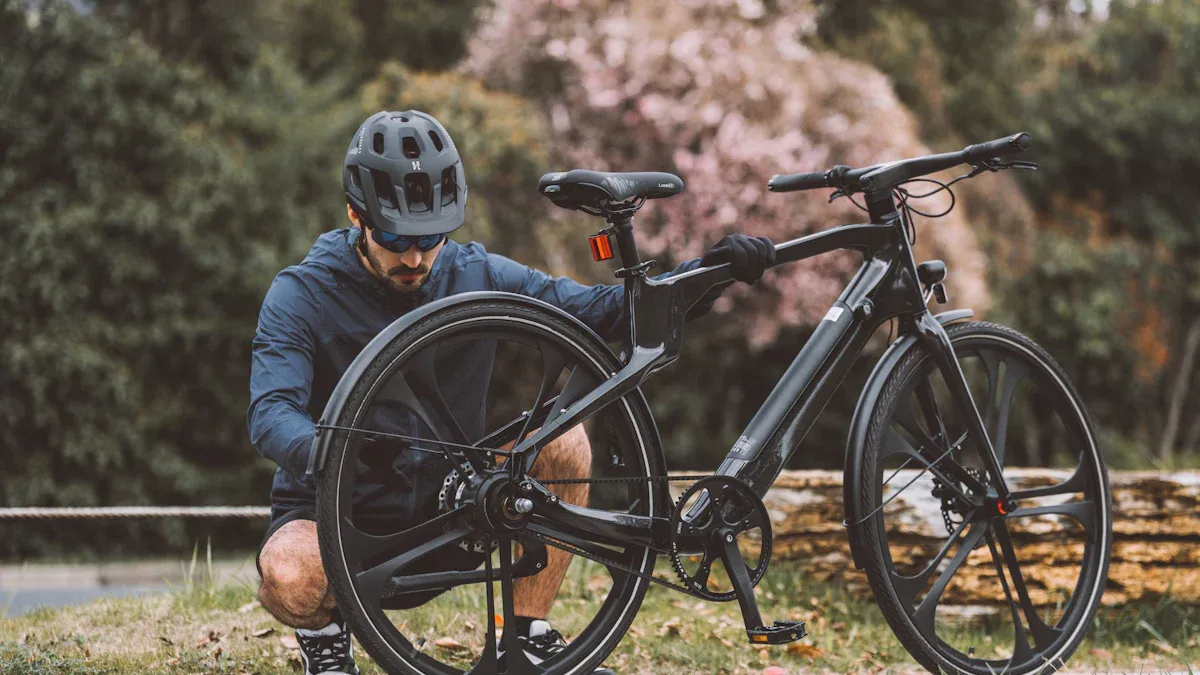
Are you considering buying a used e-bike or do you already own one? You are not alone. In Germany, millions of bicycles change owners every year, including many used e-bikes. Issues like wear, tear, and battery problems frequently occur. According to studies, batteries last for an average of only about five years. The following table shows how often typical problems occur:
Problem |
Percentage |
|---|---|
Wear |
|
Signs of wear and tear |
20% |
Battery |
High |
With a few simple tips, you can identify and fix many of these problems yourself. Get started with confidence and save both time and money!
Key Findings
Regularly check your e-bike battery. Pay attention to the range and charge cycles. A weak battery can significantly impair performance.
Listen for unusual noises or vibrations while riding. These can indicate motor issues that you should identify and fix early on.
Keep the brakes in good condition. Regular inspections and replacing worn parts will increase your safety while riding.
Check the gears and frame for damage. After a fall, ensure that everything is functioning correctly and is stable.
Carry out regular maintenance. This extends the service life of your e-bike and saves you high repair costs.
E-Bike won't start
Causes
You press the start button, but your e-bike stays off? This happens to many owners of used e-bikes. You can find the most common electrical causes here:
Battery problems: The battery is empty, defective, or not inserted correctly.
Faulty contacts and cables: Loose or corroded plug connections interrupt the flow of electricity.
Malfunctions in the display or drive unit: The display shows nothing or the motor controller is not responding.
Sometimes the problem is minor. You can identify many faults yourself if you proceed systematically. First, check if the battery is charged. Inspect the contacts on the battery and the frame. Look for visible damage to the cables. A used e-bike often shows signs of wear in these areas.
Quick fix: Restart & check contacts
You can solve many starting problems with simple steps. Turn the e-bike off completely. Wait a few seconds and restart it. This often helps with minor software glitches. Remove the battery and reinsert it. This ensures that the contacts are seated correctly.
Tip: Clean the contacts carefully with a dry cloth. Moisture or dirt quickly lead to contact problems.
Check all cable connections. Press the plugs firmly together. Check the display. If it shows error messages, a look at the owner's manual often helps.
If the e-bike still does not start after these steps, you should visit a specialist dealer. You usually cannot fix severe defects in the motor or electronics yourself. An expert will check the drive unit and replace defective parts.
With a little patience, you can often find the cause yourself. Many problems with used e-bikes can be solved with a few simple steps. This saves you time and money.
Motor problems with used e-bikes
Symptoms
Motor problems are among the most common issues with used e-bikes. You will often recognize them during the very first ride. Typical symptoms appear directly in the motor or while riding. Be especially aware of these signs:
The motor makes unusual noises or vibrates strongly.
The support suddenly cuts out, especially on uneven roads.
The chain or the drive slips.
Switching between support levels is not working correctly.
Error codes appear on the display.
Sensors are not reacting or are sending false signals.
Motors are the second most common cause of technical problems with e-bikes, accounting for 37.3 percent of issues. Brands like Bosch and Giant are often mentioned. Total failures are rare, but defects in the gearbox, freewheel, or individual components do occur. Problems appear more frequently in high-end models like the Brose Drive S Mag or Shimano Steps 6100.
Brand |
|
|---|---|
Fischer Silent Drive |
< 10% |
Bosch Performance Line |
< 10% |
Giant SyncDrive Sport |
< 10% |
Yamaha PW-ST |
< 10% |
Bosch (other models) |
Average |
Impulse Evo |
Average |
Shimano (widespread) |
Average |
Brose Drive S Mag |
> 40% |
Shimano Steps 6100 |
> 40% |
Immediate measures
You can identify many motor problems yourself and take initial steps. Start with a test ride. Listen carefully to the noise level of the motor. Loud or grinding noises often point to wear or damage. Check if the support functions evenly. Test all support levels and watch for error codes on the display.
Tip: A trained dealer can read out the number of charge cycles and the distance ridden. These values will show you how heavily the motor has been used.
If you notice loud noises, vibrations, or failures, you should visit a specialist dealer. Falls or heavy wear can lead to damage to the motor that you cannot fix yourself. Although electric motors require less maintenance than combustion engines, regular inspection protects you from expensive repairs.
With these simple steps, you can identify motor problems with used e-bikes early and act accordingly.
Battery check for used e-bikes
Range & charge cycles
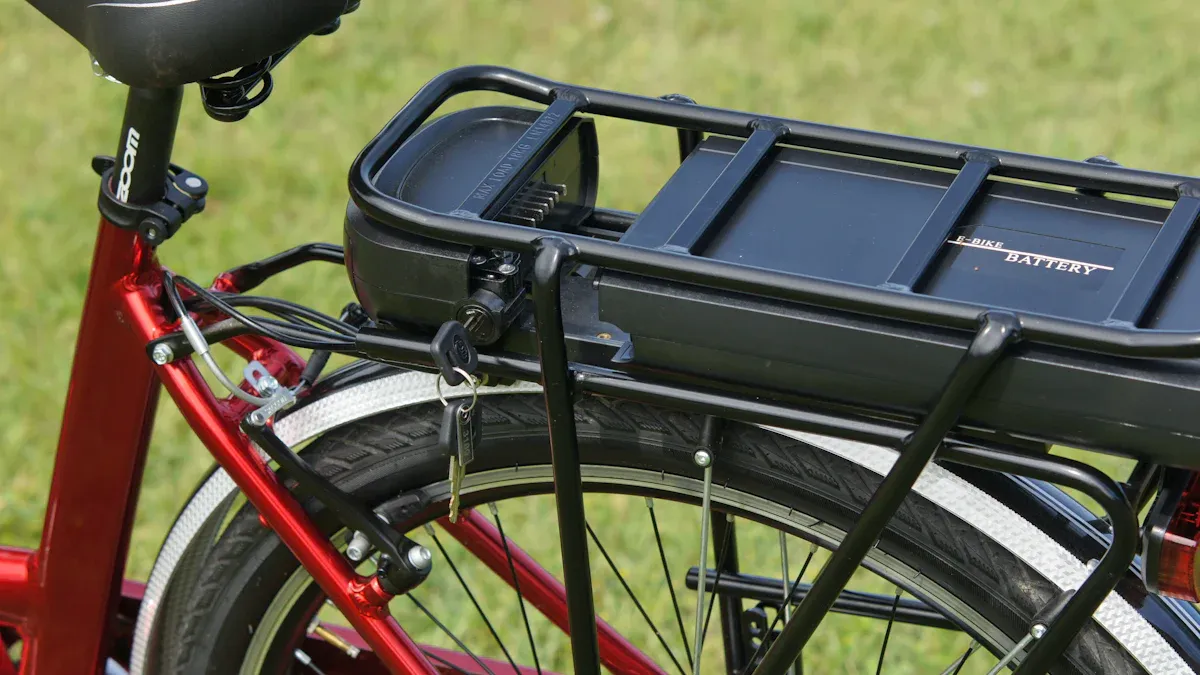
Do you want to know how much longer your used e-bike battery will last? The range and the number of charge cycles provide important clues. An e-bike battery loses performance over time. Manufacturers state that a battery usually lasts between 500 and 800 charge cycles before a replacement becomes necessary.
Charge cycles |
Service life |
|---|---|
500-800 |
Before replacement |
The range decreases with every kilometer ridden. A new battery often achieves the full distance, while a used battery manages significantly fewer kilometers. The following table shows how the range changes:
Kilometers |
Battery condition |
Range |
|---|---|---|
0 km |
New |
100 % |
500-1000 km |
Used |
Noticeably reduced |
6000 km |
Inspection |
< 80 % |
Keep an eye on whether your battery runs empty quickly after charging or if the range drops significantly. These are clear signs of aging.
Care & replace the battery
You can extend the life of your battery with simple measures. Follow these tips:
Avoid extreme temperatures. Store the battery at 10° to 20° Celsius.
Keep the charge level between 20% and 80%. Do not constantly charge to 100% or discharge completely.
During longer breaks, store the battery with about 50% remaining charge.
Clean the contacts regularly and keep them free of dust and dirt.
Do not leave the battery on the charger overnight.
Tip: A cool, dry place protects the battery from damage. Direct sunlight or frost harms performance.
Sometimes you have to replace the battery. The most important signs for this are:
The range drops significantly even though you charge the battery fully.
Charging takes much longer than before.
The battery no longer charges completely.
Visible damage, for example after a fall.
The battery does not charge despite a correct connection.
If you notice these signs, you should buy a new battery. This keeps your e-bike reliable and safe.
Check gears & frame
Gear problems
You want your e-bike to shift reliably. Problems often arise after a fall that you can quickly identify. The derailleur hanger often bends. The rear derailleur then sits crookedly and can no longer be adjusted correctly. Sometimes the cable adjustment screw is cracked or the arm of the rear derailleur is bent. Sudden gear problems after an accident are a clear warning signal.
You can check the function of the gears with simple steps:
Take a close look at the rear derailleur and the derailleur hanger. Look for bent parts or rust.
Go for a short test ride. Test all gears and ensure that the shifting works cleanly and without noise.
Ask about the maintenance history. A well-maintained e-bike shows fewer problems.
Tip: If you cannot straighten the derailleur hanger yourself, a workshop can help you quickly and safely.
Check the frame for damage
The frame of your used e-bike must remain stable. Falls often lead to deformations, cracks, or dents. Aluminum and carbon frames are particularly susceptible. Inspect the frame regularly for damage. Watch for cracks, dents, and signs of rust, especially at the welds and connection points. For carbon frames, you should visit a professional workshop, as small damages are difficult to detect.
Typical frame damage after a fall includes:
Cracked or warped forks
Defective sensors or control units
Battery damage due to impact
Destroyed spokes, rims, or hubs
You can ensure the stability of your frame by performing a visual inspection every two to three months. Clean the frame regularly and ensure that all components are firmly attached. Avoid overloading, especially with cargo bikes.
Note: Regular inspection protects you from expensive repairs and ensures more safety while riding.
Check brakes on a used e-bike
Warning signs
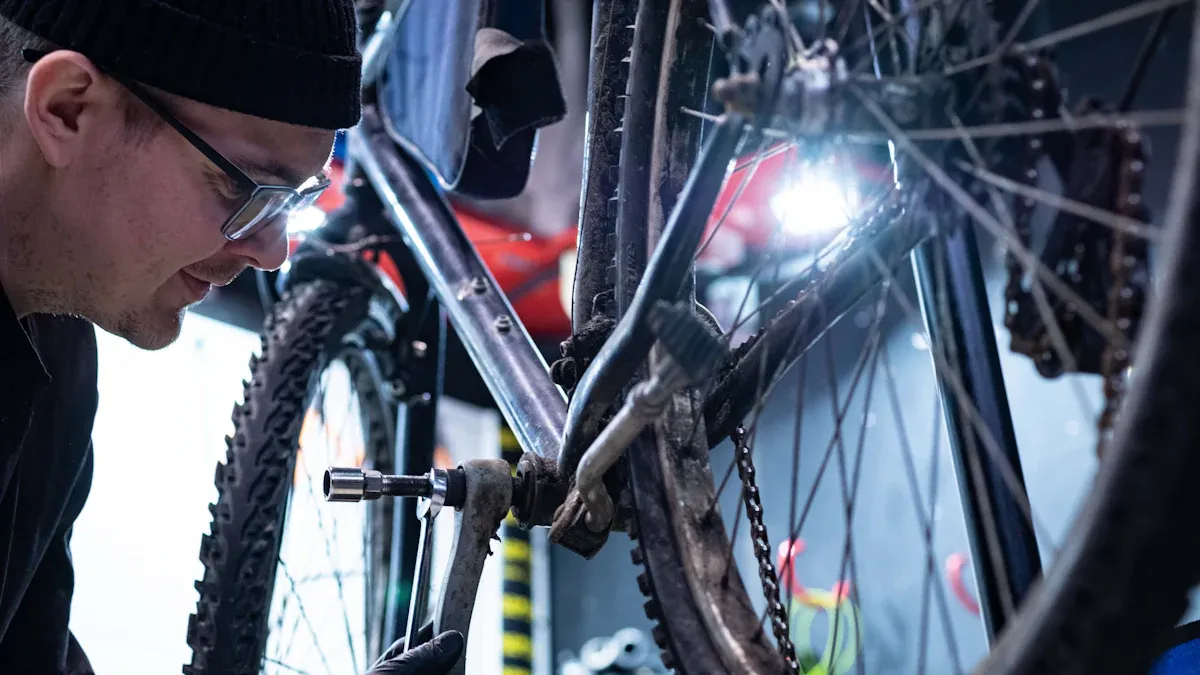
You want to ride safely. The brakes are the most important safety component on your used e-bike. Worn brakes significantly increase the risk of accidents. Accident statistics show that defective brakes play a role in over 50% of damages.
Type of damage |
Percentage |
|---|---|
Brakes |
55.3% |
Brakes (alternative) |
53.8% |
Overall wear |
22% |
You can recognize worn brakes by several warning signs:
Unusual noises when braking
Problems when shifting
Visible wear on the brake pads or brake discs
Decreasing braking force
Squealing or grinding when braking
Regular inspections are necessary. Safety always comes first. You should check the brakes often and replace them when necessary.
Tip: Brake pads and brake discs are among the most common wear parts. Replace them in good time.
Maintenance & Replacement
You can maintain the brakes yourself. Follow these simple steps:
Bleed the brakes: Remove air bubbles from the system. This will improve braking performance.
Change brake pads: Replace worn pads. There should be at least 1mm of pad remaining before you replace them.
Clean the brake disc: Clean dirt and oil off the brake disc. This prevents squeaking.
You should check your brake pads regularly. For rim brakes, change the pads when the indicator line is reached. For disc brakes, at least 1mm of pad should remain for safe riding.
Check brake pads regularly
Replace if braking power decreases or noise occurs
Rim brakes: Replace at the indicator line
Disc brakes: Replace if there is less than 1mm of pad
Note: Clean and intact brakes protect you and others. You can carry out many maintenance tasks yourself. If you are unsure, a workshop can help you.
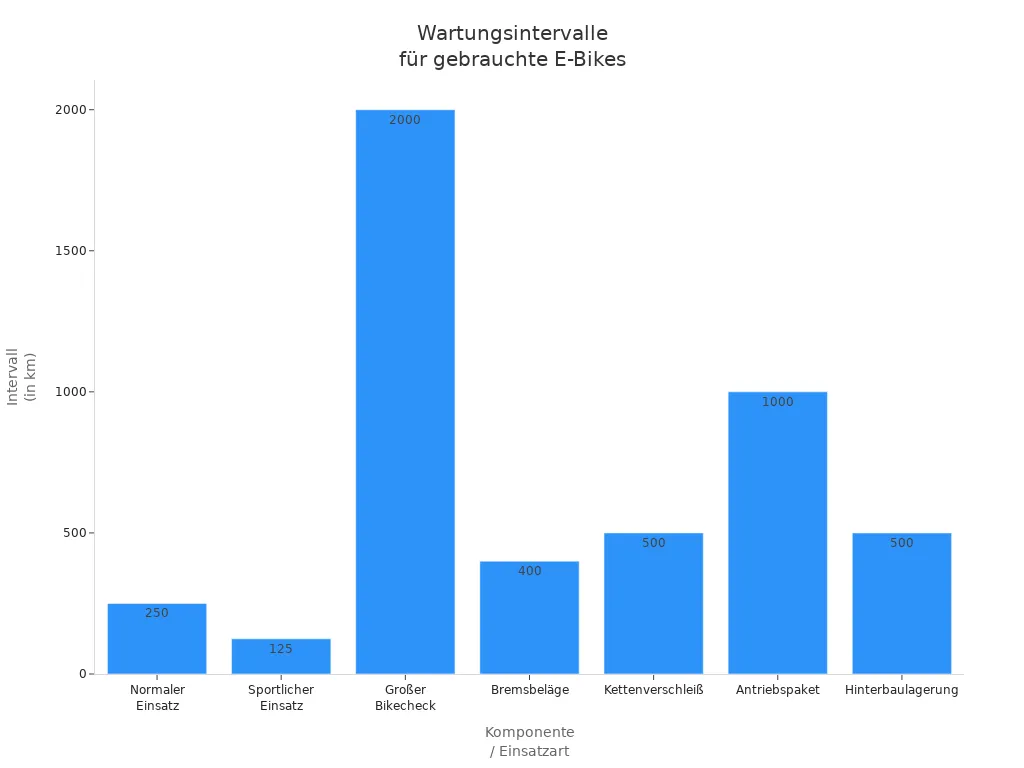
You can fix many problems with your used e-bike yourself. Regular maintenance increases its lifespan and reliability. The following table shows you the recommended maintenance intervals:
Type of use |
Maintenance interval |
|---|---|
Normal use |
at the latest after 250km or 6 months |
Frequent sporty use |
at the latest after 125km or 6 months |
Major bike check |
every 2,000km or one year |
Brake pads |
every 400km |
Chain wear |
every 500km |
Drive package |
every 1,000km |
Rear suspension linkage |
every 500km / once a year |
Good maintenance saves you high repair costs. The following table shows the average costs:
Type of repair |
Costs (Euro) |
|---|---|
Change brake pads |
20 - 50 |
Replace chain |
30 - 60 |
Change tires |
40 - 80 |
Maintain/replace gears |
50 - 100 |
Replace motor |
300 - 1000 |
Replace battery |
300 - 900 |
Tip: You can identify problems early and can often fix them yourself. If you are unsure, a specialist dealer will help you.
FAQ
How can you recognize a defective e-bike battery?
Check the range after charging. If it drops significantly, or if the battery charges slowly or not at all, it is likely defective. Visible damage to the casing is another warning sign.
What should you do if the brakes are squeaking?
Clean the brake discs with a clean cloth. Replace the brake pads if they are worn down. Squeaking is often a sign of dirt or wear.
Tip: Check the brakes regularly. This makes your ride safer.
How often should you maintain a used e-bike?
Maintain your e-bike every 250 kilometers or at least every six months. If you use it for sport, check it more often. Regular maintenance extends its lifespan.
Type of use |
Maintenance recommendation |
|---|---|
Daily |
every 250 km / 6 months |
Sporty |
every 125 km / 6 months |
Can you fix motor problems yourself?
You can check for small problems yourself, such as loose cables or sensors. For loud noises or system failures, it is better to go to a specialist dealer. Motors often require special tools.