

You immediately feel how the wheel size influences your riding experience. With a 28-inch mountain bike, you get a balanced mix of agility and good rollover capability. Small wheels offer you quick changes in direction, while large wheels roll more easily over obstacles. Your choice of wheel size determines how you master trails and the kind of riding sensation you experience.
Key takeaways
Wheel size strongly influences your ride: small wheels are agile, large ones roll better over obstacles.
26-inch wheels offer high agility and direct handling but are less comfortable on long stretches.
28-inch mountain bikes combine agility with good rollover capability and are versatile enough for many trails.
29-inch wheels roll best, offer high comfort, and are ideal for long tours and fast descents.
Choose the wheel size that suits your riding style, height, and the trails you ride to get the best experience.
Wheel sizes
26-inch
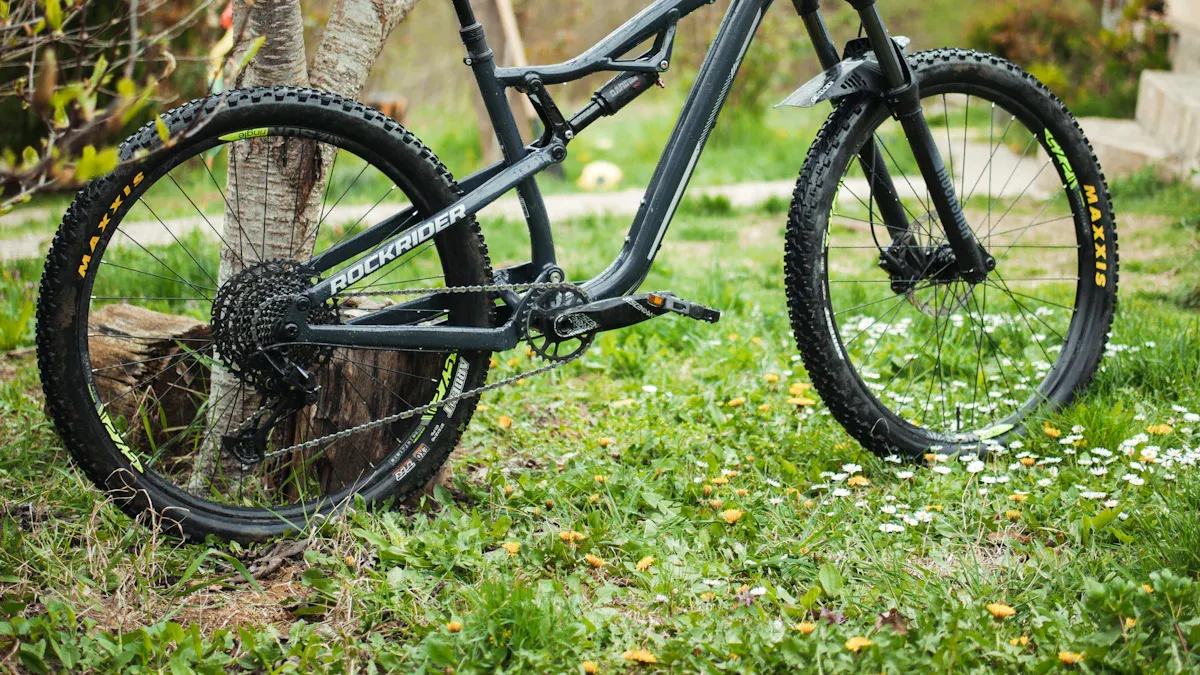
You are familiar with the classic mountain bike with 26-inch wheels. This size offers you great agility. You can change direction quickly and navigate tight corners easily. Many riders appreciate the direct riding feel. The weight usually remains low, which helps with acceleration and carrying the bike. On very technical trails, you often feel secure with 26-inch wheels because the bike is easy to control. However, small wheels roll less effectively over roots and rocks, and you will feel bumps more intensely. Speed on long, straight stretches is often lower than with larger wheels.
28-inch mountain bike
With a 28-inch mountain bike, you get a good compromise. You benefit from better rollover capability than with 26-inch wheels, while still retaining plenty of agility. Many manufacturers use modern materials like carbon or aluminum. Tests show that carbon wheels are very impact-resistant and offer uniform tension distribution, making them robust and durable. Aluminum wheels impress with low weight and high stiffness. The inertia values usually range between 427 and 511 kg x cm². This means you can accelerate quickly off-road while remaining stable. Rim width and tire pressure influence how well your wheel rolls over obstacles. Wider rims allow for lower air pressure, giving you more grip and better puncture protection. A 28-inch mountain bike is suitable for many trails and riders looking for versatility.
Tip: When using a 28-inch mountain bike, pay attention to the correct combination of rim width and tire pressure. This is how you get the best out of your bike.
29-inch
29-inch wheels offer a completely different riding experience. You roll more easily over obstacles like rocks or roots. The higher moment of inertia means that you need more power to start moving. However, you maintain your momentum better, especially on flowy trails. The riding feel remains calm and secure, even at high speeds. The shallower angle of approach helps you roll over obstacles smoothly. The contact patch with the ground remains similar to other sizes if you choose the same air pressure and tire width. Tire tread and air pressure determine how much grip you have. 29-inch wheels are particularly suitable for long tours and fast descents.
Differences on the trail
Agility
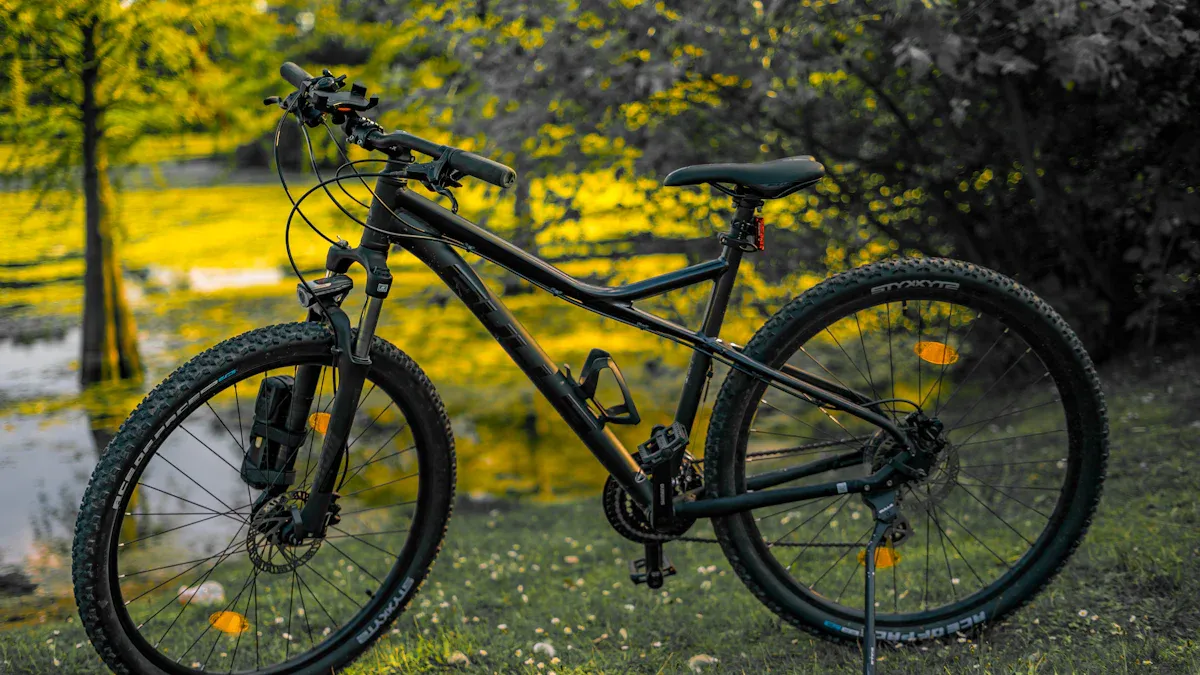
You feel your bike's agility immediately when cornering tightly or making quick changes in direction. With 26-inch wheels, you can ride very nimbly. You can turn the bike easily and react quickly to obstacles, which helps especially on technical trails with many turns.
A 28-inch mountain bike still gives you plenty of control. You can steer the bike well, but you will notice that it runs a bit more smoothly than a 26-inch bike. Agility remains high, but you gain more stability, making the ride safer when traveling at higher speeds.
29-inch wheels feel less agile. You need more space for turns, and the bike reacts more slowly to steering input. On open, fast trails, this is not an issue, but on tight courses, it can slow you down.
Tip: If you often ride on tight, twisty trails, a smaller wheel size offers advantages in agility.
Rollover capability
Rollover capability shows how well your bike rides over stones, roots, or small obstacles. With 26-inch wheels, you feel bumps more intensely, and the wheel gets stuck on obstacles more often. You have to work harder to keep the bike steady.
A 28-inch mountain bike rolls better over obstacles. The larger wheel size helps you overcome roots and stones more easily. You feel safer and have to exert less energy. The bike remains stable even when the trail gets rough.
29-inch wheels offer the best rollover capability. You glide over obstacles almost effortlessly. The large wheel carries momentum and remains calm. You feel the difference clearly, especially on fast, rocky trails.
Comfort
Comfort is important when you spend a long time on the bike. Small wheels like 26-inch transmit more shocks to your body; you feel every bump. This can become exhausting on long tours.
With a 28-inch mountain bike, you get more comfort. The larger wheel absorbs shocks better. You can use wider tires and adjust the air pressure to suit your needs, tailoring the riding sensation to your preferences.
29-inch wheels offer the highest level of comfort. The large volume of the tires and the shallow angle when rolling over bumps ensure a smooth ride. You can cover longer distances without getting tired.
Speed
Speed depends heavily on wheel size. With 26-inch wheels, you accelerate quickly; the wheel is light and agile. On long, straight stretches, however, you lose speed because the wheel requires more energy to overcome obstacles.
A 28-inch mountain bike combines fast acceleration with good speed over longer distances. You maintain momentum better than with 26-inch wheels, while still being able to react quickly.
29-inch wheels roll best. You maintain speed easily, especially on flat or descending trails. The large wheel keeps its momentum and saves you energy.
Feature |
26-inch |
28-inch mountain bike |
29-inch |
|---|---|---|---|
Agility |
Very high |
High |
Medium |
Rollover capability |
Low |
Good |
Very good |
Comfort |
Low |
Good |
Very good |
Speed |
High (short) |
High (balanced) |
Very high |
Note: 28-inch and 29-inch wheels often have the same rim diameter (622 mm). Differences usually lie in tire width and height. 28-inch mountain bikes often use narrower or lower-profile tires than 29-inch bikes, which influences the riding feel and applications.
Pros & Cons
26-inch
You benefit from high agility and quick reaction on the trail.
Low weight makes acceleration and carrying the bike easier.
Wider 26-inch tires offer a larger contact patch and thus more traction, especially on loose surfaces.
Many riders find the handling intuitive and direct, especially in tight corners.
You can control the bike more easily when riding through technical passages.
The look and classic riding feel appeal to many experienced bikers.
Note: Many users report that the difference off-road between 26 and 29 inches is often minimal, and personal preference plays a major role.
Cons:
You feel bumps and obstacles more strongly because rollover capability is limited.
On long, fast descents, you lose speed and comfort more easily.
The selection of new bikes and components is becoming increasingly smaller.
28-inch mountain bike
The 28-inch mountain bike offers you a balanced mix of agility and rollover capability. You benefit from modern technology and versatile applications. Comparative studies show that this wheel size is more stable than 29 inches, as lower leverage and greater spoke triangulation provide more robustness. You have more space for wide tires, which gives you additional grip on technical climbs. The ride remains playful and balanced, especially on flowy and technical trails.
Pros |
Cons |
|---|---|
Rollover capability not quite as good as 29 inches |
|
Stable construction, robust against impacts |
Not as widespread as 29 inches |
More space for wide tires and low air pressure |
Component selection sometimes limited |
Fast acceleration and braking |
Momentum doesn't last quite as long as with 29 inches |
Versatile for different rider types |
Sometimes too small for very tall riders |
Tip: If you are looking for a versatile bike for different trails, the 28-inch mountain bike is a modern and robust solution.
29-inch
You roll more easily over obstacles and feel fewer shocks on rough trails.
The large wheel maintains momentum better, which saves you energy on long descents and fast sections.
You enjoy a calm, secure riding feel, especially at high speeds.
29-inch wheels are particularly suitable for tall riders and long tours.
Cons:
You need more power to start moving and accelerate.
The bike feels less agile, especially in tight corners or on technical trails.
Physically, the wheels are less stable than smaller sizes, which can matter under extreme stress.
Handling may feel bulky to smaller riders.
Note: The choice of wheel size depends heavily on your riding style, height, and preferred trails. You will often only notice many of the differences when comparing them directly.
Recommendations
Beginners
Are you new to the trail? Then you will benefit from a bike with 27.5-inch wheels. Many tests show that this size is particularly suitable for beginners. You steer the bike easily and feel secure in corners. The bike remains manageable and gives you a good feeling as you learn new techniques. Flowy trails with undulations and small jumps quickly become fun. Smaller riders often get along better with 27.5-inch wheels than with large 29-inch wheels.
Tip: Choose a wheel size that suits your height. This will give you more control and help you learn faster.
Sporty riders
Are you looking for more performance and want to go faster? Then it is worth looking at the differences between 27.5 and 29 inches. 29-inch wheels roll more efficiently over obstacles and maintain momentum better; you feel more smoothness on rough trails. 27.5-inch wheels, on the other hand, offer you more agility and faster acceleration, which helps with technical climbs and tight corners.
Wheel size |
Advantages for sporty riders |
|---|---|
29-inch |
More momentum, smoother riding feel, better rollover |
27.5-inch |
More agile, faster in corners, easier to accelerate |
Body height
Your height plays an important role in choosing a wheel size. If you are shorter, handling 27.5-inch wheels is often easier for you. Tall riders benefit from 29-inch wheels because the bike fits their proportions better. You feel more secure and have more control when the wheel size matches your build.
Note: Try out different sizes to find the best riding feel for you.
Special trails
Do you often ride on specific trails? Then it is worth taking a closer look at wheel choice. Many modern trail bikes use 29 inches, a size that offers the best performance on most trails. You roll more easily over roots and stones and enjoy more comfort. For technical, tight trails, or if you want to jump a lot, a bike with 27.5 inches can be more fun. A mix of 29 inches in the front and 27.5 inches in the back offers a good compromise between rollover capability and freedom of movement.
29-inch: Ideal for long, fast, and rough trails.
27.5-inch: Better for tight, technical courses and smaller riders.
Mixed wheels: Versatile for changing conditions.
You have seen how strongly wheel size influences your riding experience. Studies show that 27.5" stands for stability, 29" for rollover capability, and mixed setups for versatility. The choice depends on your riding style, height, and intended use. The following table will help you make a decision:
Rider type |
Recommendation |
|---|---|
Short riders |
27.5" |
Tall riders |
29" |
Versatility |
Mixed setup |
Tip: Test different sizes, because tires, air pressure, and geometry also determine your perfect trail experience.
FAQ
Which wheel size is suitable for beginners?
As a beginner, you are best off with 27.5 inches. This size gives you control and confidence. You learn new techniques more easily. Many entry-level bikes use this size.
What is the difference between 28 and 29 inches?
Both sizes often have the same rim diameter. 29 inches usually uses wider and taller tires. 28 inches offers you more agility. 29 inches rolls over obstacles better.
How does body height influence the choice of wheel size?
Your body height plays a major role. Short riders find 27.5 inches easier to handle. Tall riders feel more comfortable with 29 inches. You get more control when the size suits you.
Can I mount wide tires on a 28-inch mountain bike?
Yes, you can often mount wide tires on a 28-inch mountain bike. Pay attention to the rim width and the frame. Wider tires give you more grip and comfort.
Do 26-inch mountain bikes still make sense?
You benefit from 26 inches if you are looking for an agile bike. However, spare parts are becoming rarer. Many modern bikes use larger wheels. For special trails, 26 inches remains an option.